I'll be honest: I nearly gave up on my podcast. Not because of the ideas, or the guests, or the endless editing — but because of the sound.
For almost two years I recorded “Tea Break Tales”, a little show about the odd histories of British high streets, through my laptop's built‑in microphone and, later, a £15 headset. My mum listened. My best mate listened. And one very kind listener in Leeds emailed to say she loved the stories but “couldn't hear past the echo”. Ouch.
I'd been putting off buying a proper microphone because, frankly, the choice terrified me. USB or XLR? Cardioid or condenser? Did I need an interface? Every forum thread ended in an argument between people who clearly owned a recording studio.
The afternoon everything changed
A friend who edits radio for a living sent me a link to a UK shop called podcastmicrophones.co.uk and simply said: “Filter by how you record. Don't overthink it.”
What struck me straight away was how calm it felt. Instead of a wall of flashing deals, there were six clear categories — USB podcast mics, XLR studio mics, hybrid USB/XLR, pro & broadcast, budget & starter, and bundles with a stand included. Every product page lists the real specs: connection type, polar pattern, frequency response. No guesswork, no jargon soup.
They stock around 50 microphones from names I actually recognised — Rode, Shure, Sennheiser, Audio‑Technica, Behringer — so I knew I wasn't gambling on some mystery brand.
See the range Hannah chose from
Free UK delivery on orders over £40 · easy returns
Why I went for a USB mic
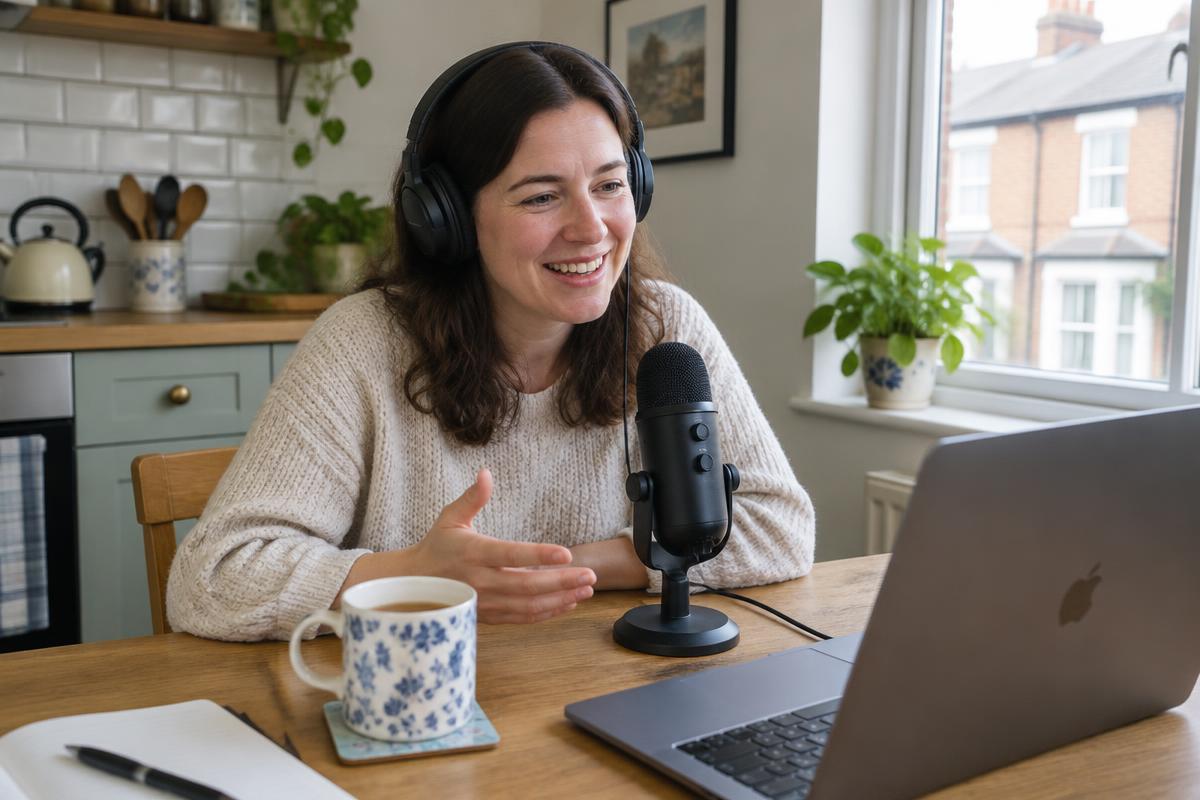
I record at my kitchen table in Islington, usually with a cup of tea going cold beside me. I didn't want boxes, cables and knobs. The USB category was made for people like me: plug it straight into the laptop and press record. If I ever get serious, the hybrid USB/XLR models mean I could upgrade later without buying a second microphone — which felt like a sensible, very British, “future‑proof but don't splurge” compromise.
Prices ranged from about £25 for a genuine starter mic up to several hundred for broadcast‑grade kit. I landed somewhere comfortably in the middle and, because it was over £40, delivery was free.
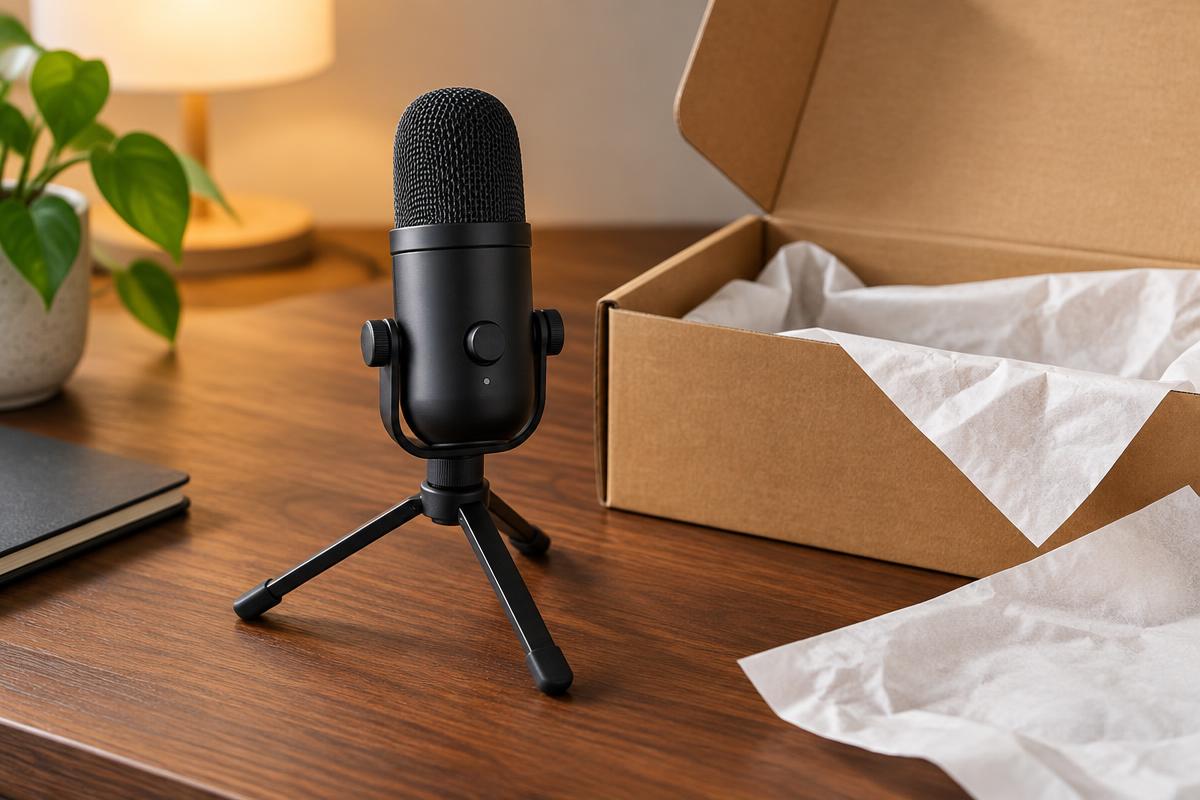
First recording: I actually gasped
I plugged it in, my laptop recognised it instantly, and I read the intro of my next episode. Then I played it back through headphones and — I'm not exaggerating — I said “oh my goodness” out loud to an empty kitchen.
My voice sounded warm. Close. Like me, but on the radio. The cardioid pattern meant the fridge hum and the buses on Upper Street simply… faded into the background. The echo my Leeds listener complained about? Gone.
- Set‑up time: about four minutes, including untangling the cable.
- Editing time: cut nearly in half — far less noise to clean up.
- Listener emails: three in the first week saying the show “sounds brilliant now”.
The bit nobody tells you: confidence
Here's what surprised me most. When you sound good, you perform better. I stopped mumbling. I started inviting guests I'd been too embarrassed to ask before — including a local historian who, it turns out, had been listening for months.
My downloads have roughly doubled since the switch. I can't promise the microphone did all of that, of course, but it took away the one thing that was holding me back.
“If you've been putting this off because the choice feels overwhelming — just pick how you record, read the specs, and buy once.”
Would I recommend it?
Without hesitation. The shop made a confusing decision feel easy, delivery was quick, the returns policy gave me peace of mind (I didn't need it), and the microphone has transformed how my little show sounds.
If you podcast, stream, record voice‑overs, or just spend half your life on video calls, have a look. Start with the USB category if you want simplicity, or the bundles if you'd like a stand thrown in.